Category Archives: 1980-1989

Year 93

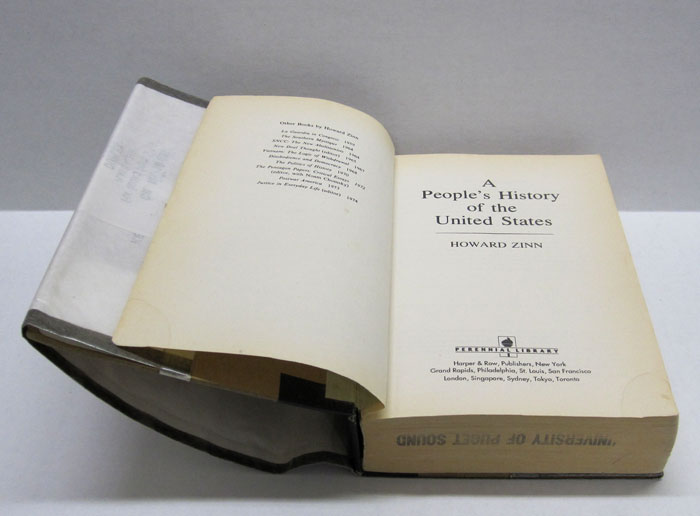
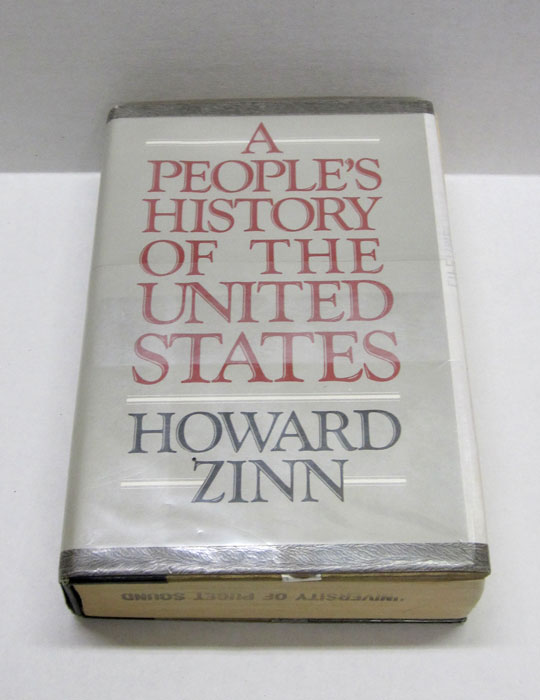
1980: A People’s History of the United States

Author/Editor: Howard Zinn

Find it in Collins Library!

The history of America taught in most schools through the 20th Century was that that of generals not soldiers, of bosses not workers, of men not women, of conquerors not  the conquered, of presidents not slaves. A People’s History of the United States is considered revisionist and Marxist nonsense by its detractors, and an inspired, approachable tour de force.

A decade into the 21st Century, A People’s History has become the textbook in some high school classrooms, and has been updated and re-released in numerous editions.

Year 94

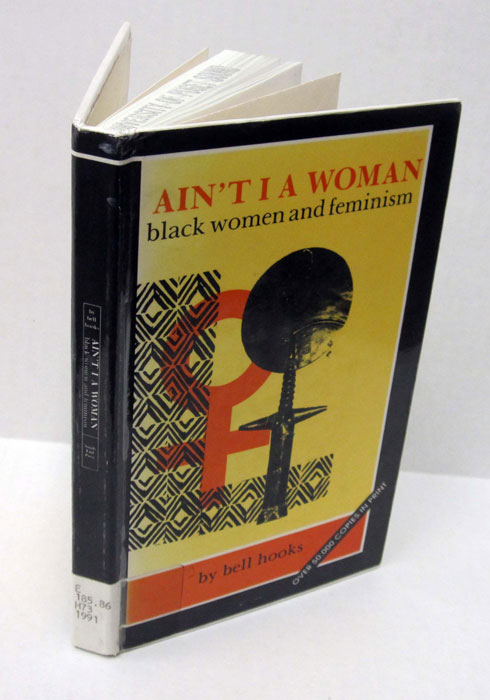
1981: Ain’t I a Woman: Black Women and Feminism

Author/Editor: bell hooks

Find it in Collins Library!

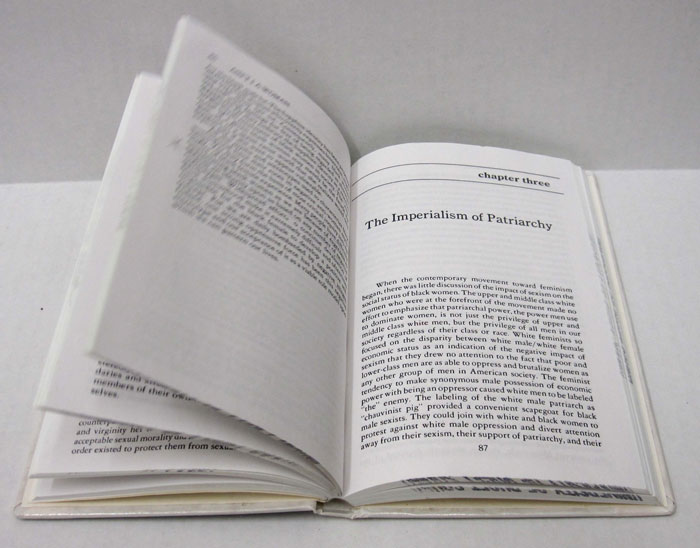
In this groundbreaking book, hooks examines the impact of sexism on black women throughout history, from slavery to the feminist movement. According to hooks, the response to the question “Ain’t I a woman too?” was a resounding “No” from white men, black men, and white women.

Year 95

1982: The Color Purple

Author/Editor: Alice Walker

Find it in Collins Library!

The story of a black woman named Celie, The Color Purple is a powerful depiction of racial, cultural, and gender issues in the rural South. The narrative is conveyed through letters that Celie writes to God, describing the people in her life and the relationships that she has with them. The personal journey that Celie experiences and the growth of her understanding about the world and herself as the story progresses can be seen from the increasingly introspective and analytical “letters.” This book speaks to the power of female relationships and solidarity in the face of adversity.

A very well-received film starring Whoopi Goldberg, Danny Glover, and Oprah Winfrey and directed by Steven Spielberg was released in 1985. The Color Purple (film) was nominated for 11 Academy Awards, although it won none.

Year 97

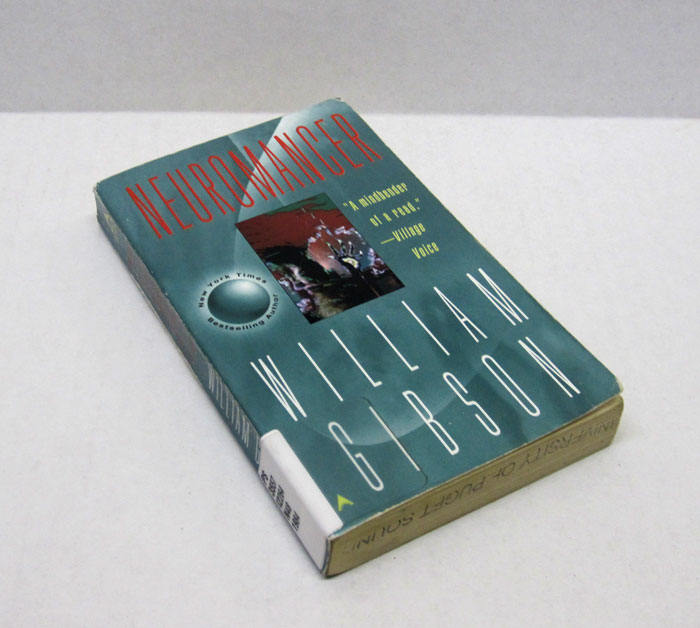
1984: Neuromancer

Author: William Gibson

Find it in Collins Library!

Canadian author William Gibson singlehandedly invented the cyberpunk genre of literature when he wrote this novel. When I re-read this book in the late 90’s, I was struck by how much Gibson had underestimated the rate at which computing hardware specifications would grow. Case (a character), for example, at one point tries to sell “three megabytes of hot RAM”.

Year 98

1985: The Handmaid’s Tale & White Noise

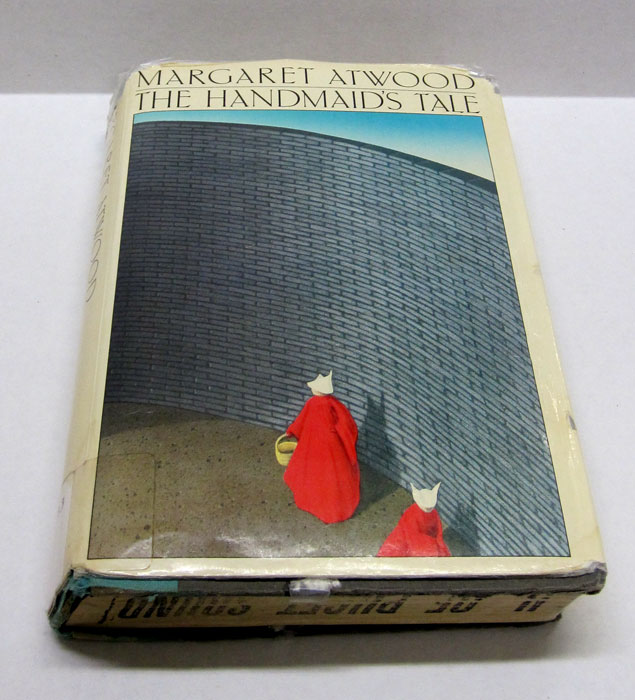
The Handmaid’s Tale

Author/Editor: Margaret Atwood

Find it in Collins Library!

Set in the near future, this book by Canadian author Margaret Atwood, describes life in what was once the United States but now a new nation called the Republic of Gilead, a highly repressive social state with extreme consequences for members of the society.  The story is told through the eyes of Offred, one of the Handmaid’s in this new world.   This book addresses not only issues of women’s rights but the effects of oppression on the human spirit.  The books has received many accolades including: winner of the Governor’s General’s Award, the Los Angeles Times Prize, the Arthur C. Clarke Award for Science Fiction and the Commonwealth Literary Prize, and shortlisted for the Booker Prize (UK) and the Ritz-Paris-Hemingway Prize (Paris).  Information about Atwood and her publications can be found on her website, or listen to Atwood talking about her book:

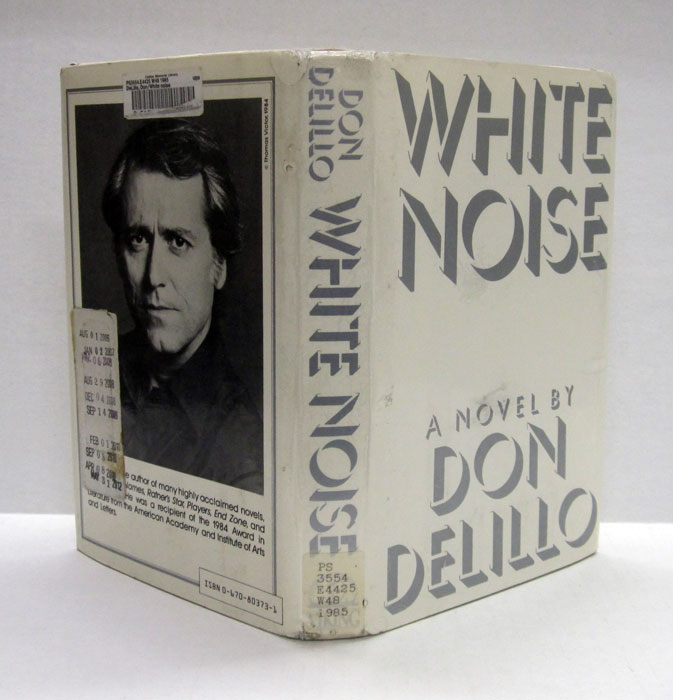
White Noise

Author/Editor: Don DeLillo

Find it in Collins Library!

A self-reflexive post-modern novel (is there any other kind?), which pokes fun at post-modernity in academia, psychiatric pharmaceuticals, the nuclear family, aging, and environmental collapse. Jack Gladney is a non-German speaking professor in Hitler Studies at an unnamed university. An ill-defined toxic airborne event is reported, and an evacuation is forced. Dylarama, an experimental pharmaceutical intended to treat the fear of death has unexpected side effects.

Nothing says 1985 like post-modern academic shenanigans.


Year 99

1986: Cadillac Desert

Author: Marc Reisner

Find it in Collins Library!

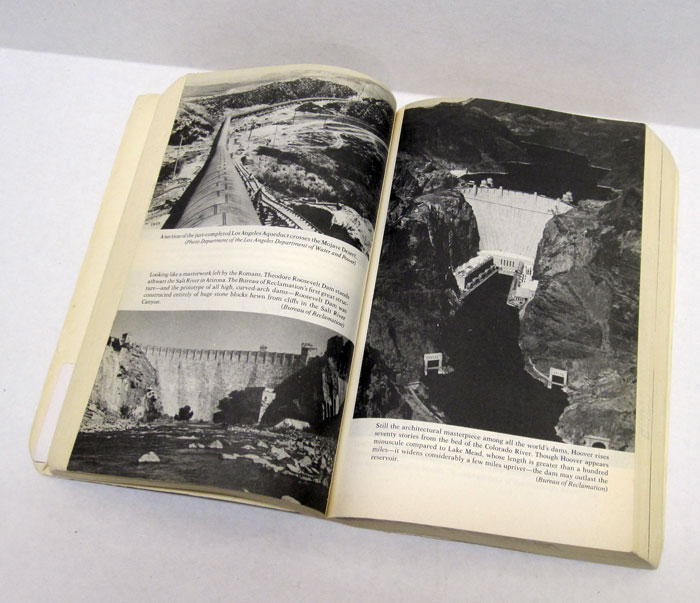
This influential book took a critical look at land development and water policy in the western states of the United States, and presaged the current and growing conversation about global water issues by 25 years. I worked as a technician at an environmental consulting firm in the late 1980’s, and I remember this book being on the shelf of pretty much every environmental engineer in the shop.

Year 100

1987: And the Band Played On

Author/Editor: Randy Shilts

Find it in Collins Library!

This book is featured on the Library of Congress web site as one of the books that shaped America:

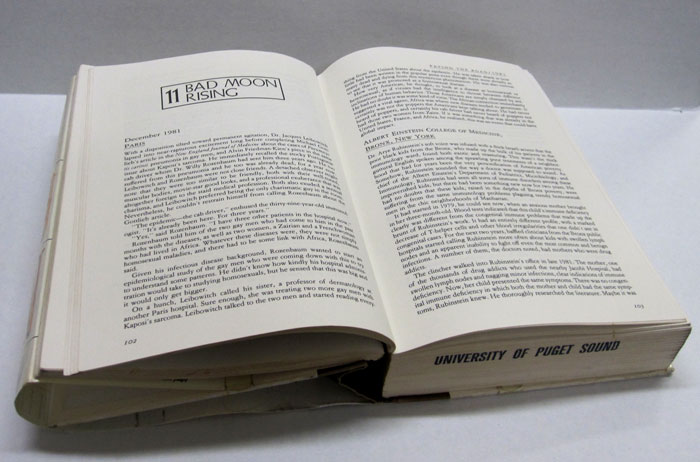
And the Band Played On is the story of how the AIDS epidemic spread and how the government’s initial indifference to the disease led to a new awareness of the urgency of devoting government resources to fighting the virus. Shilts’s investigation has been compared to other works that led to increased efforts toward public safety, such as Upton Sinclair’s The Jungle.”

The meticulous research and commitment of the author to document the AIDS epidemic is a moving chronicle.  In the acknowledgements, the author writes:

“the people for whom I will always bear special reverence are those who were suffering from AIDS and who gave some of their last hours for interviews, sometimes while they were on their deathbeds laboring for breath.  When I’d ask why they’d take the time for this, most hoped that something they said would save someone else from suffering.  If there is an act that better defines heroism, I have not seen it.”

He goes on to write in the Preface,

“Because of their efforts, the story of politics, people, and the AIDS epidemic is, ultimately, a tale of courage as well as cowardice, compassion as well as bigotry, inspiration as well as venality, and redemptions as well as despair.”

Year 101

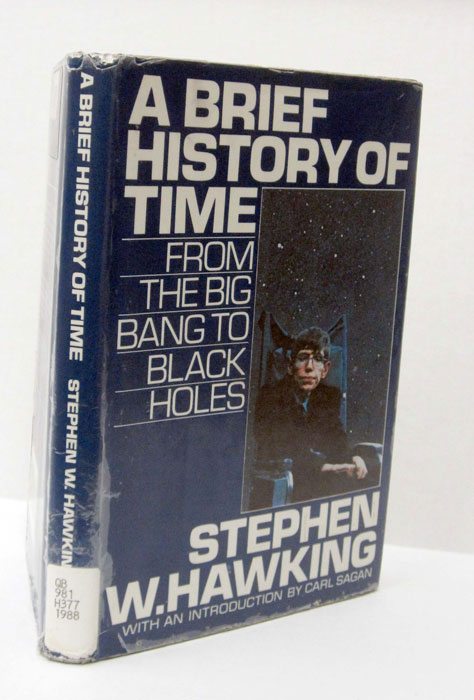
1988: A Brief History of Time: From The Big Bang to Black Holes

Published: New York

Author/Editor: Stephen W. Hawking

Find it in Collins Library!

Stephen Hawking’s A Brief History of Time, his first popular book, was published in 1988, and went on to sell 10 million copies (and, apocryphally, to be named the most bought and unread book).

A Brief History of Time is brief, vividly explained, and contains just one equation (E=mc2, for the curious), but it is still a mind-boggling tour of physics of the late twentieth century. Hawking reviews classical physics, relativity, and quantum theory. Then, he explores the search for a unified field theory that could combine these and resolve puzzling problems. Hawking concluded it was possible such a theory could soon be developed.

We’re still looking. But as Hawking wrote “A complete, consistent, unified theory is only the first step: our goal is a complete understanding of the events around us, and of our own existence.” That is a quest we can find meaning in for years. Partly thanks to the impact of this and other well-written popular science books, hopefully even more of us will find meaning in that quest in the future.

Year 102

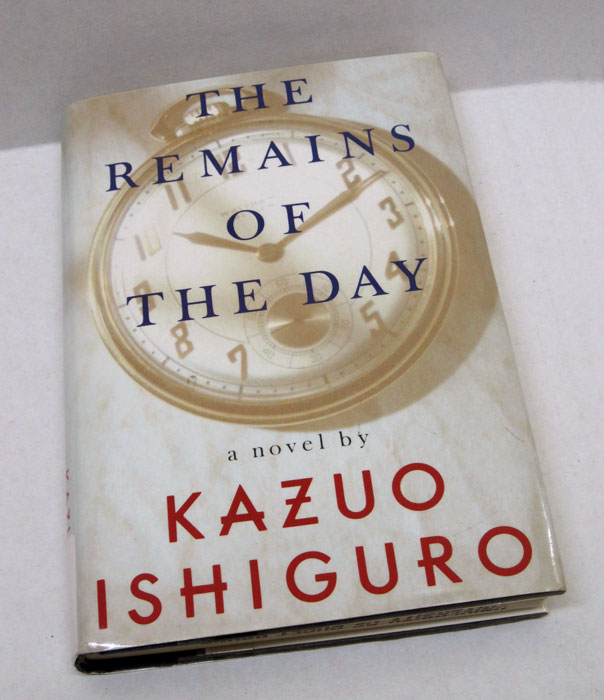
1989: The Remains of the Day

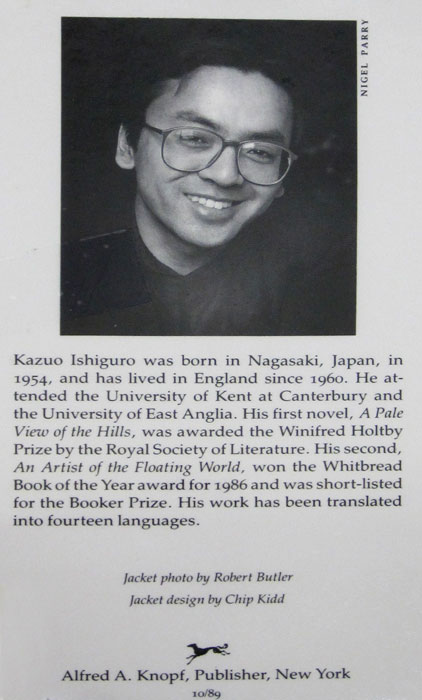
Author: Kazuo Ishiguro

Find it in Collins Library!

Stevens is an English butler who highly values his role in society and has undying loyalty to his employer of over thirty years. Told in a retrospective, journal entry type of style, The Remains of the Day explores Stevens’ life as a butler in pre-World War II England and his struggles to adapt to a new social norm after the war. He has sacrificed relationships with his family and repressed his feelings for Miss Kenton, the housekeeper, in order to do his duty by his master and by extension, in his eyes, his country.

Ishiguro seems to almost poke fun at the fabled English country house culture and the class system – he claims that the international view of “[t]he English butler [who] has to be terribly reserved and not have any personal reaction to anything that happens around him” was useful in creating this story for a global audience. We see similar personalities amongst the characters in British television shows such as Upstairs, Downstairs and Downton Abbey.